


What is GM diet ?
The GM Diet (short for General Motors Diet) is a seven‑day weight‑loss regimen that has gained massive popularity online and in wellness communities for its promise of rapid weight loss in a very short period. Despite its widespread attention, the diet is largely considered a fad diet by health professionals due to lack of scientific backing and concerns about nutrient balance and sustainability.
Origins and Claims
The gm diet is commonly—but inaccurately—attributed to the General Motors Corporation, the U.S. Department of Agriculture (USDA), the Food and Drug Administration (FDA), and supposedly underwent testing at the Johns Hopkins Research Center in the 1980s. However, these claims are urban myths; there’s no credible evidence that GM, the USDA, or FDA developed or endorsed this diet, and its true origin remains unclear.
Proponents of the diet make bold claims such as:
- Weight loss of up to 10–15 pounds (4.5–6.8 kg) in a week.
- “Detoxifying” the body.
- Enhanced fat burning and improved digestion.
Yet there is no peer‑reviewed scientific study validating these claims in any long‑term, well-controlled context.
How the GM Diet Works?
The gm diet prescribes specific food groups for each of the seven days:
Day 1: Only Fruits (No Bananas)
What to Eat: All fruits except bananas. Examples: apples, oranges, melons, berries, papaya, watermelon.
Purpose:
- Fruits are high in water and fiber, which helps flush out toxins and reduces water retention.
- The day is low in calories, which starts the calorie deficit and initial weight loss.
- Avoiding bananas helps keep the sugar and calorie intake lower.
Tip: Eat at least 8–12 glasses of water to support detoxification.
Day 2: Only Vegetables, Raw or Cooked
What to Eat: All vegetables, either raw or lightly cooked. Examples: spinach, carrots, cabbage, broccoli, cucumbers, zucchini. Avoid potatoes.
Purpose:
- Vegetables provide fiber, vitamins, and minerals, keeping the digestive system active.
- Like fruits, vegetables are low in calories, reinforcing the calorie deficit.
- Raw vegetables help in cleansing, while cooked vegetables make it easier to digest for some people.
Tip: Start the day with a boiled potato (optional for extra energy) but avoid for strict adherence.
Day 3: Fruits and Vegetables (Except Bananas & Potatoes)
What to Eat: Combination of fruits and vegetables from Days 1 and 2.
Purpose:
- Combines benefits of both fruits and vegetables: fiber, vitamins, antioxidants, and hydration.
- Helps reduce cravings and prepares the body for the addition of proteins in the next days.
- Still very low in calories to promote fat loss.
Tip: Drink plenty of water; include raw and cooked vegetables for variety.
Day 4: Only Bananas and Milk
What to Eat: 3–4 bananas and 3 glasses of milk.
Purpose:
- Provides potassium and magnesium from bananas to replenish electrolytes lost in the first three days.
- Milk supplies protein and calcium, preventing muscle loss.
- This day is more filling and prevents fatigue by giving moderate calories.
Tip: Choose low-fat or skim milk for lower calories.
Day 5: Beef, Chicken, or Fish + Tomatoes
What to Eat: Lean meats or fish, and 6–7 tomatoes throughout the day.
Purpose:
- Introduces high-quality protein, which helps maintain muscle mass while the body burns fat.
- Tomatoes provide fiber, antioxidants, and hydration, balancing the protein intake.
- Supports fat metabolism due to the combination of protein and water-rich vegetables.
Tip: Avoid fried foods or oils; cook protein using boiling, grilling, or steaming.
Day 6: Beef, Chicken, or Fish + Vegetables
What to Eat: Lean meats or fish along with a variety of vegetables.
Purpose:
- Continues high protein intake while adding fiber from vegetables.
- Helps in detoxifying and balancing nutrients.
- Promotes lean fat loss instead of muscle loss due to protein presence.
Tip: Vegetables can be raw, cooked, or in soup form for easier digestion.
Day 7: Brown Rice, Fruits, Vegetables, and Fruit Juice
What to Eat: Brown rice, a variety of vegetables, fruits, and one glass of fruit juice.
Purpose:
- Gradually reintroduces carbohydrates to the body, preventing sudden weight gain after a low-calorie week.
- Maintains balanced nutrition: carbs for energy, fiber from fruits and vegetables, vitamins, and minerals.
- Helps stabilize metabolism and prepare the body for normal eating post-diet.
Tip: Portion control is key; avoid refined carbs or sugary foods.
Followers are also encouraged to drink 8–12 glasses of water daily and sometimes a low‑calorie “Wonder Soup” of cabbage and vegetables.
The diet works primarily by extremely restricting calories, creating a substantial calorie deficit that produces rapid weight loss—especially water weight due to depleted glycogen stores—not necessarily fat loss.
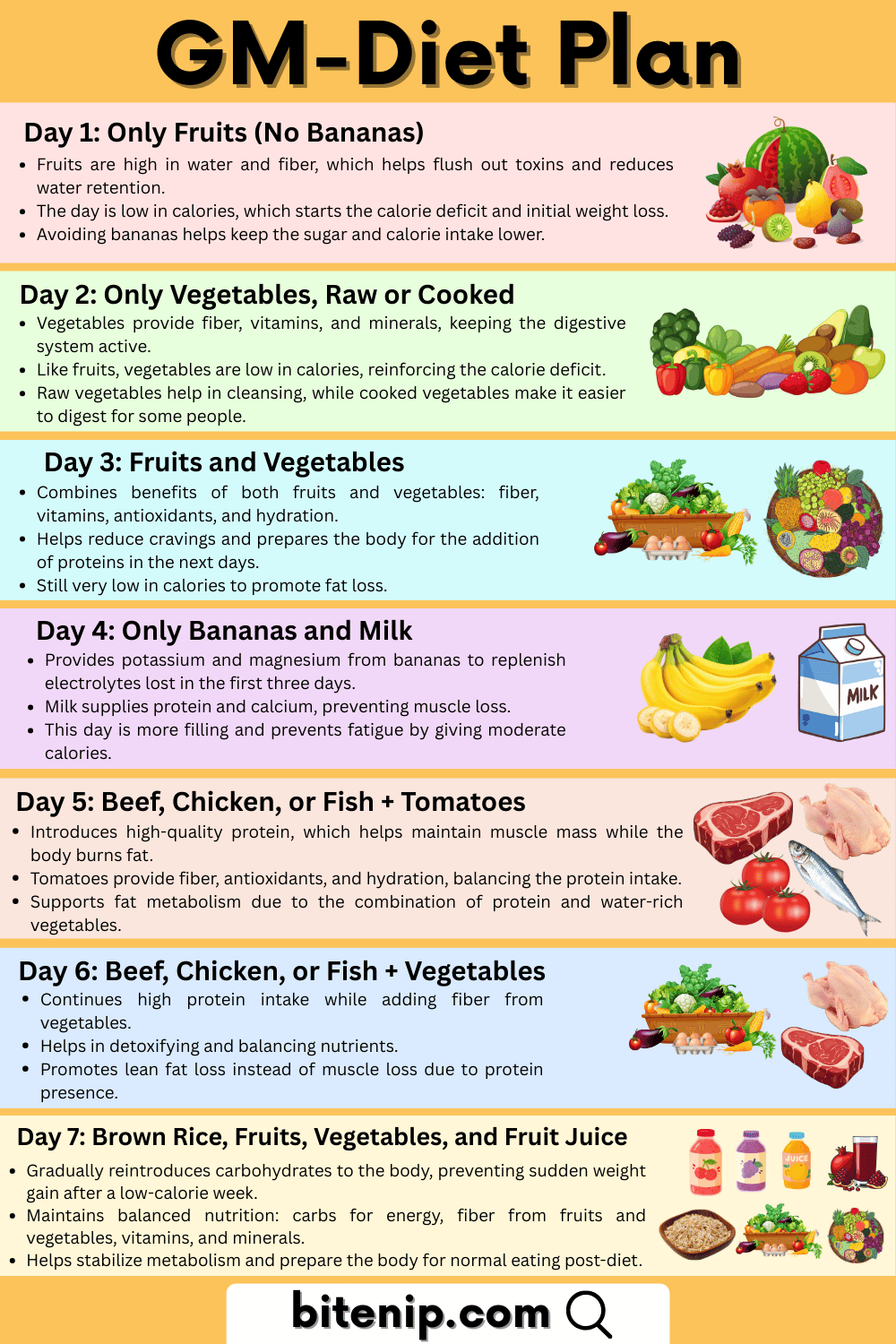
gm diet plan
Claimed Benefits
Supporters often highlight perceived benefits such as:
- Rapid weight loss due to low calorie intake.
- Increased fruit and vegetable consumption, which can be healthful.
- Simple, structured guidelines that are easy to follow for one week.
It’s true that fruits and vegetables are nutrient‑dense and low in calories, and increasing their intake generally improves diet quality. However, this alone doesn’t make the GM Diet a sound nutritional plan.
Scientific Evidence (or Lack Thereof)
Importantly, no reputable clinical trials or long‑term studies support the claims of the GM Diet. It has not been evaluated by major nutrition research bodies, nor have its purported mechanisms (such as “negative‑calorie foods”) been validated through rigorous research.
Many dietetics and nutrition experts categorize the GM Diet as a crash diet—a method that produces temporary weight loss through severe restriction rather than sustainable metabolic change.
Risks and Drawbacks of GM diet
Health authorities and nutritionists highlight multiple risks associated with the GM Diet:
1. Nutritional Deficiencies
Cutting out entire food groups on specific days may lead to insufficient protein, healthy fats, vitamins, and minerals over the course of the week. Days with only fruits or only milk and bananas, for example, provide limited essential nutrients like vitamin B12, iron, and calcium.
2. Temporary Weight Loss
Much of the initial weight loss is due to water loss and depleted glycogen, not fat loss. This type of weight change is usually regained quickly once normal eating resumes.
3. Metabolic and Physical Issues
Severe calorie deficits can result in:
- Fatigue, weakness, dehydration, headaches, and irritability.
- Muscle loss due to inadequate protein.
- Potential slowing of metabolic rate, making future weight management more difficult.
4. Unsustainable and Restrictive
The one‑week format does not teach long‑term healthy eating habits, and many dieters end up regaining weight once they stop the plan.
5. Not Suitable for Everyone
Pregnant women, children, individuals with diabetes, heart disease, or other chronic conditions are generally advised not to follow such extreme diets without medical supervision.
Expert Perspectives
Most nutrition experts emphasize that sustainable weight loss comes from gradual, balanced changes in eating patterns and lifestyle:
- A diet that inadequately supplies macronutrients and micronutrients is widely considered inferior to balanced plans that include all food groups.
- Focusing on whole foods, consistent calorie control, regular physical activity, and behavioral changes yields more lasting health outcomes than short-term crash diets.
Conclusion
The GM Diet Plan remains one of the more notorious fad diets in the wellness world. While it may lead to a quick drop on the scale, this is mainly due to water loss and caloric restriction, not sustainable fat loss. Moreover, it is not backed by credible scientific research, carries nutritional risks, and lacks a foundation in balanced, evidence-based nutrition.
If your goal is long-term health and weight management, it’s safer and more effective to adopt balanced dietary patterns recommended by registered dietitians—rather than short-term, restrictive regimens like the GM Diet.


