


College life is exciting. However, it often brings unhealthy eating habits. For example, students skip meals, eat junk food, or rely on instant snacks. As a result, their energy levels drop, and concentration becomes weak.
Therefore, following a proper diet plan for college student is very important. Not only does it improve health, but it also boosts focus and productivity. In this detailed guide, you will learn a simple, affordable, and practical diet plan that fits perfectly into a student’s routine.
Table of Contents
ToggleWhy a Healthy Diet is Important for College Students
First of all, college students have a busy lifestyle. They attend classes, complete assignments, and often stay up late. Because of this, their body needs proper nutrition.
In addition, a healthy diet supports brain function. As a result, students can focus better and perform well in exams. Moreover, good food habits improve mood and reduce stress.
On the other hand, poor eating habits can lead to tiredness and low energy. Therefore, making smart food choices is essential.
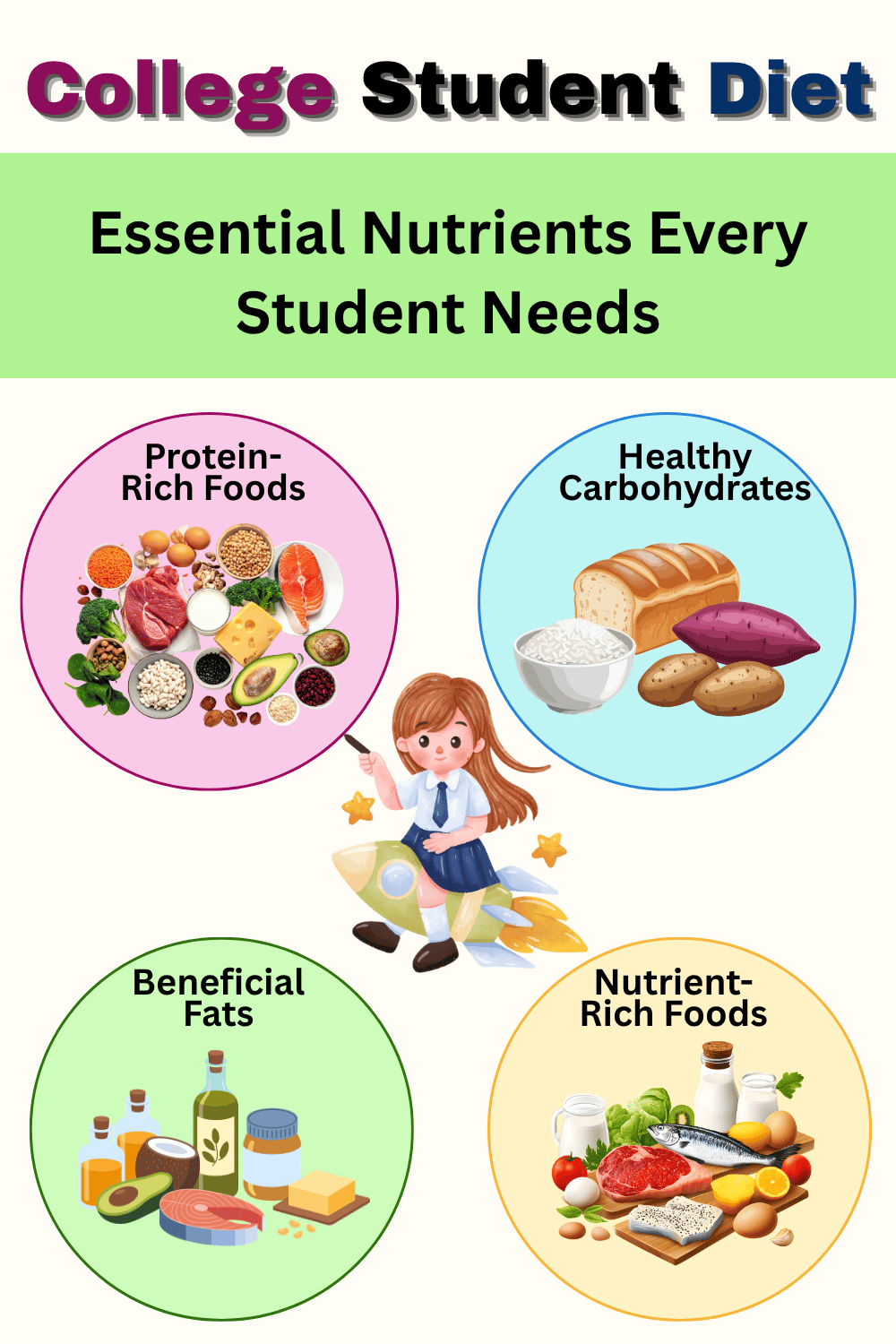
Essential Nutrients Every Student Needs
Before planning meals, it is important to understand what your body needs.
1. Carbohydrates
Firstly, carbohydrates provide energy. Foods like rice, roti, and oats are great sources.
2. Protein
Secondly, protein helps in muscle growth and repair. For example, eggs, chicken, lentils, and yogurt are excellent choices.
3. Healthy Fats
In addition, healthy fats support brain health. Nuts, seeds, and olive oil are good options.
4. Vitamins and Minerals
Moreover, fruits and vegetables provide essential nutrients. They also boost immunity.
5. Water
Finally, staying hydrated is very important. Without enough water, your body cannot function properly.
Complete Daily Diet Plan for College Students
Breakfast (7:00 – 9:00 AM)
Start your day with a healthy meal. For example, you can choose:
- Boiled eggs with whole wheat bread
- Oatmeal with milk and fruits
- Peanut butter sandwich with banana
Moreover, add a glass of milk or fresh juice. As a result, you feel energetic throughout the morning.
Mid-Morning Snack (10:30 – 11:30 AM)
After a few hours, you may feel hungry. Therefore, eat something light such as:
- Apple or banana
- Handful of almonds or peanuts
- Yogurt
This helps maintain energy levels.
Lunch (1:00 – 2:00 PM)
Lunch should be balanced. For instance:
- Roti or rice with daal
- Chicken, fish, or vegetable curry
- Fresh salad and yogurt
In addition, try to avoid fried and oily foods.
Evening Snack (4:00 – 5:00 PM)
During study time, cravings are common. However, instead of junk food, choose healthy snacks:
- Roasted chickpeas
- Smoothies
- Boiled corn
As a result, you stay active and focused.
Dinner (7:00 – 9:00 PM)
Dinner should be light. For example:
- Grilled chicken with vegetables
- Daal with roti
- Vegetable soup
Moreover, avoid eating too late. This improves digestion and sleep.
Late Night Snack (Optional)
Sometimes, students study late at night. In that case, choose light options such as:
- A glass of milk
- A small fruit
- A few nuts
However, avoid heavy meals at night.
Weekly Meal Planning Tips
Planning your meals in advance is very helpful. Firstly, it saves time. Secondly, it reduces stress.
For example:
- Cook food in bulk for 2–3 days
- Prepare simple meals like daal and rice
- Keep healthy snacks ready
As a result, you avoid unhealthy eating.
Healthy Eating Habits for Students
In addition to meal planning, good habits are also important.
- Firstly, eat your meals on time
- Secondly, chew your food properly
- Moreover, avoid distractions while eating
- Finally, listen to your body’s hunger signals
These small habits make a big difference.
Easy and Healthy Snack Ideas
Sometimes, students feel hungry between meals. Therefore, it is important to choose wisely.
Here are some simple options:
- Peanut butter sandwich
- Boiled eggs
- Fresh fruits
- Homemade popcorn
- Yogurt with honey
In contrast, avoid chips, burgers, and sugary drinks.
Budget-Friendly Diet Tips
Most college students have limited money. However, eating healthy is still possible.
- Firstly, cook at home instead of eating outside
- Secondly, buy seasonal fruits and vegetables
- In addition, purchase items in bulk
- Moreover, avoid expensive packaged foods
As a result, you save money and stay healthy.
Common Mistakes Students Should Avoid
Even with a good plan, mistakes happen. Therefore, avoid these habits:
- Skipping breakfast
- Drinking too many soft drinks
- Eating fast food daily
- Staying dehydrated
- Eating late at night
Instead, try to follow a balanced routine.
Tips to Stay Consistent with Your Diet Plan
Staying consistent can be difficult. However, a few simple steps can help.
- Firstly, set realistic goals
- Secondly, keep healthy food available
- Moreover, avoid keeping junk food nearby
- Finally, reward yourself occasionally
As a result, you can maintain your diet plan easily.
Best Diet Plan For College Student
Conclusion
In conclusion, following a proper diet plan for college student is simple if you stay consistent. Although college life is busy, small healthy choices can make a big difference.
Therefore, focus on balanced meals, regular eating habits, and proper hydration. Over time, these changes will improve your health, energy, and academic performance.


