
Healthy eating plays a vital role in maintaining overall well-being. In today’s fast-paced lifestyle, many people rely on processed and unhealthy foods. However, choosing nutritious meals can significantly improve both physical and mental health.
Moreover, healthy eating does not mean strict dieting or avoiding your favorite foods completely. Instead, it focuses on balancing nutrients and choosing foods that support the body. As a result, individuals who maintain healthy eating habits often experience long-term health benefits.
Furthermore, a balanced diet provides the body with essential vitamins, minerals, and energy. Consequently, it helps people stay active and productive throughout the day. Therefore, understanding the benefits of healthy eating can encourage better food choices and a healthier lifestyle.
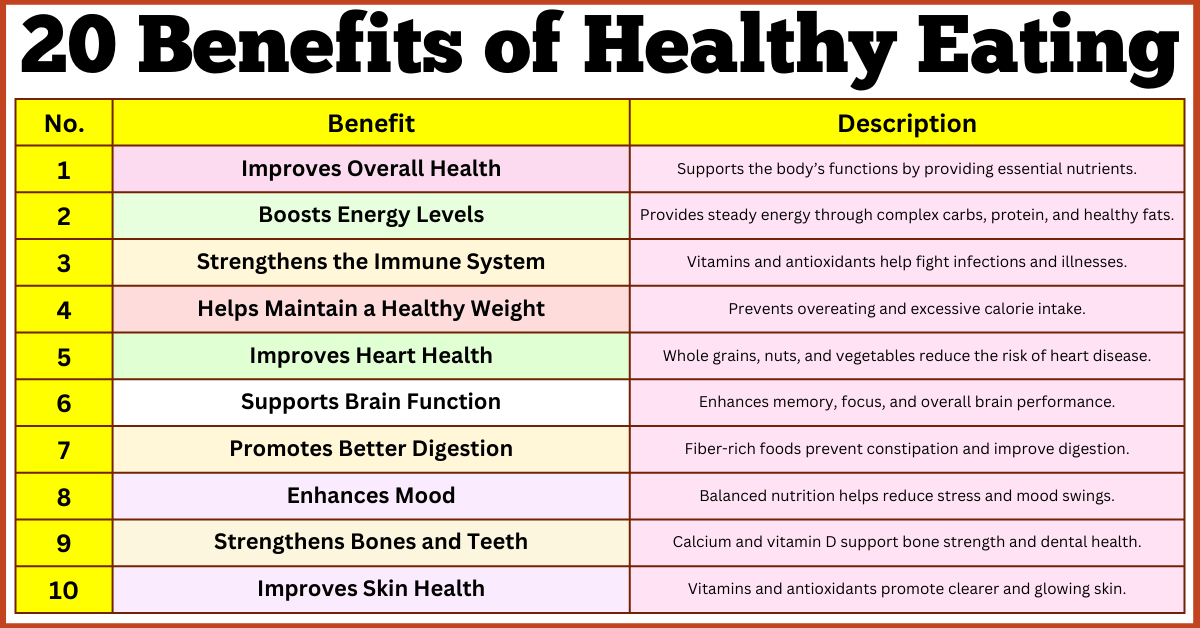
1. Improves Overall Health
First of all, healthy eating supports the body’s basic functions. Additionally, nutritious foods provide essential nutrients that keep organs working properly.
2. Boosts Energy Levels
Moreover, foods rich in complex carbohydrates, protein, and healthy fats provide steady energy. As a result, people feel more energetic throughout the day.
3. Strengthens the Immune System
Furthermore, fruits and vegetables contain vitamins and antioxidants. Consequently, they help the body fight infections and illnesses.
4. Helps Maintain a Healthy Weight
In addition, healthy eating prevents overeating and excessive calorie intake. Therefore, it supports maintaining a balanced body weight.
5. Improves Heart Health
Similarly, foods such as whole grains, nuts, and vegetables support cardiovascular health. As a result, they help reduce the risk of heart disease.
6. Supports Brain Function
Meanwhile, nutritious foods improve memory and concentration. Consequently, they help the brain function more effectively.
7. Promotes Better Digestion
Moreover, fiber-rich foods improve digestion. As a result, they prevent common problems like constipation.
8. Enhances Mood
Interestingly, healthy foods can positively affect mental health. Therefore, balanced nutrition may help reduce stress and mood swings.
9. Strengthens Bones and Teeth
Additionally, foods rich in calcium and vitamin D support bone strength. Consequently, they help prevent bone-related issues.
10. Improves Skin Health
Furthermore, vitamins and antioxidants nourish the skin. As a result, healthy eating promotes clearer and more glowing skin.
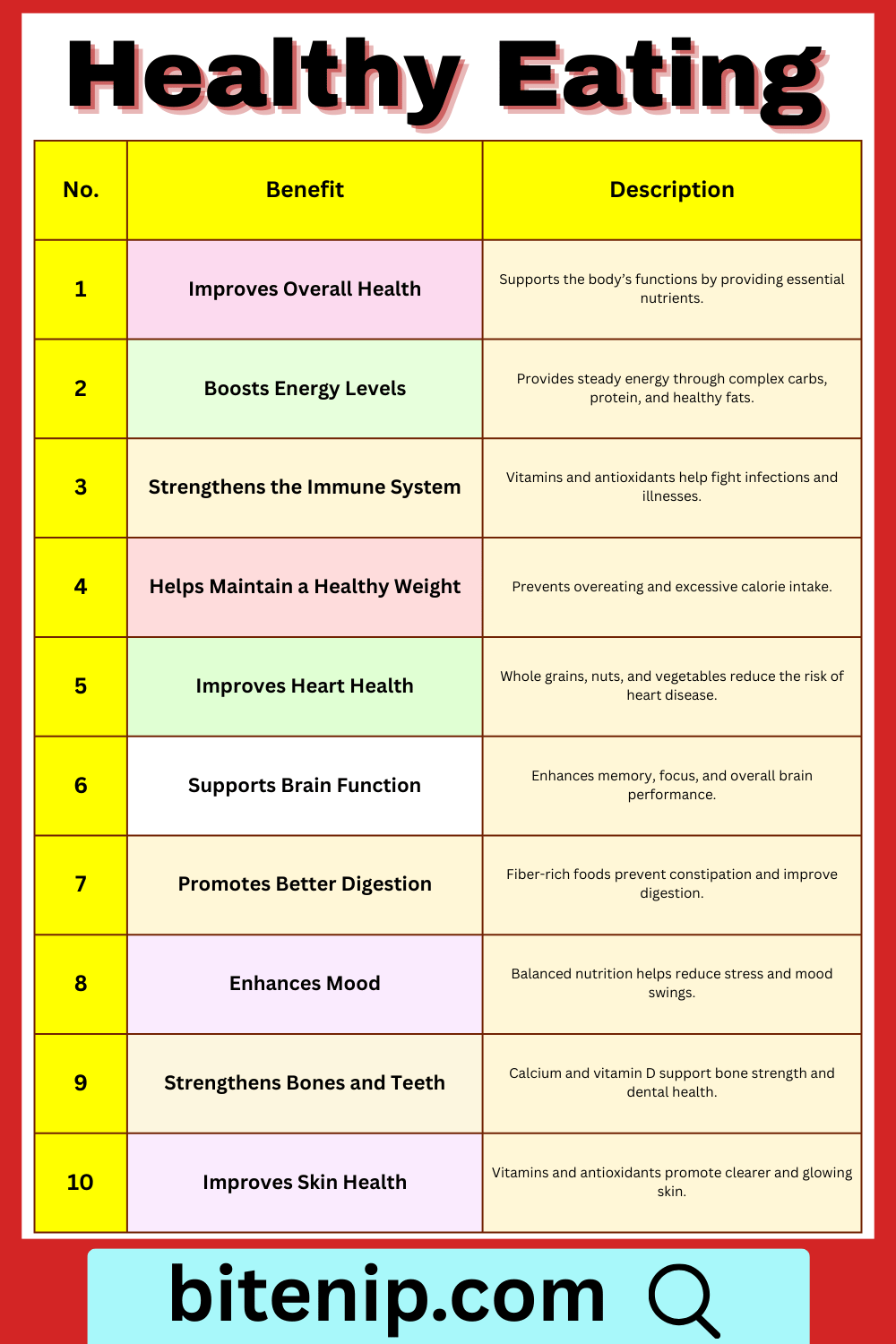
20 benefits of healthy eating
11. Supports Muscle Growth
Likewise, protein-rich foods help repair and build muscles. Therefore, they are important for active individuals.
12. Reduces the Risk of Chronic Diseases
In addition, healthy diets can lower the risk of diseases such as diabetes and high blood pressure. Consequently, long-term health improves.
13. Improves Sleep Quality
Interestingly, balanced meals can regulate hormones that control sleep. As a result, people may experience better sleep patterns.
14. Increases Longevity
Furthermore, nutritious diets support long-term health. Therefore, they may contribute to a longer life.
15. Improves Focus and Productivity
Meanwhile, proper nutrition fuels the brain. Consequently, individuals can concentrate better on daily tasks.
16. Supports Healthy Hair
Additionally, vitamins and minerals strengthen hair roots. As a result, healthy eating promotes stronger and shinier hair.
17. Reduces Inflammation
Moreover, foods rich in antioxidants reduce inflammation in the body. Consequently, they help prevent various health problems.
18. Improves Metabolism
Similarly, balanced nutrition helps regulate metabolism. Therefore, the body processes nutrients more efficiently.
19. Encourages Healthy Habits
Furthermore, people who follow a healthy diet often develop other good habits. As a result, they may exercise more and maintain a better lifestyle.
20. Improves Quality of Life
Finally, healthy eating supports both physical and mental well-being. Consequently, individuals enjoy a healthier and more active life.
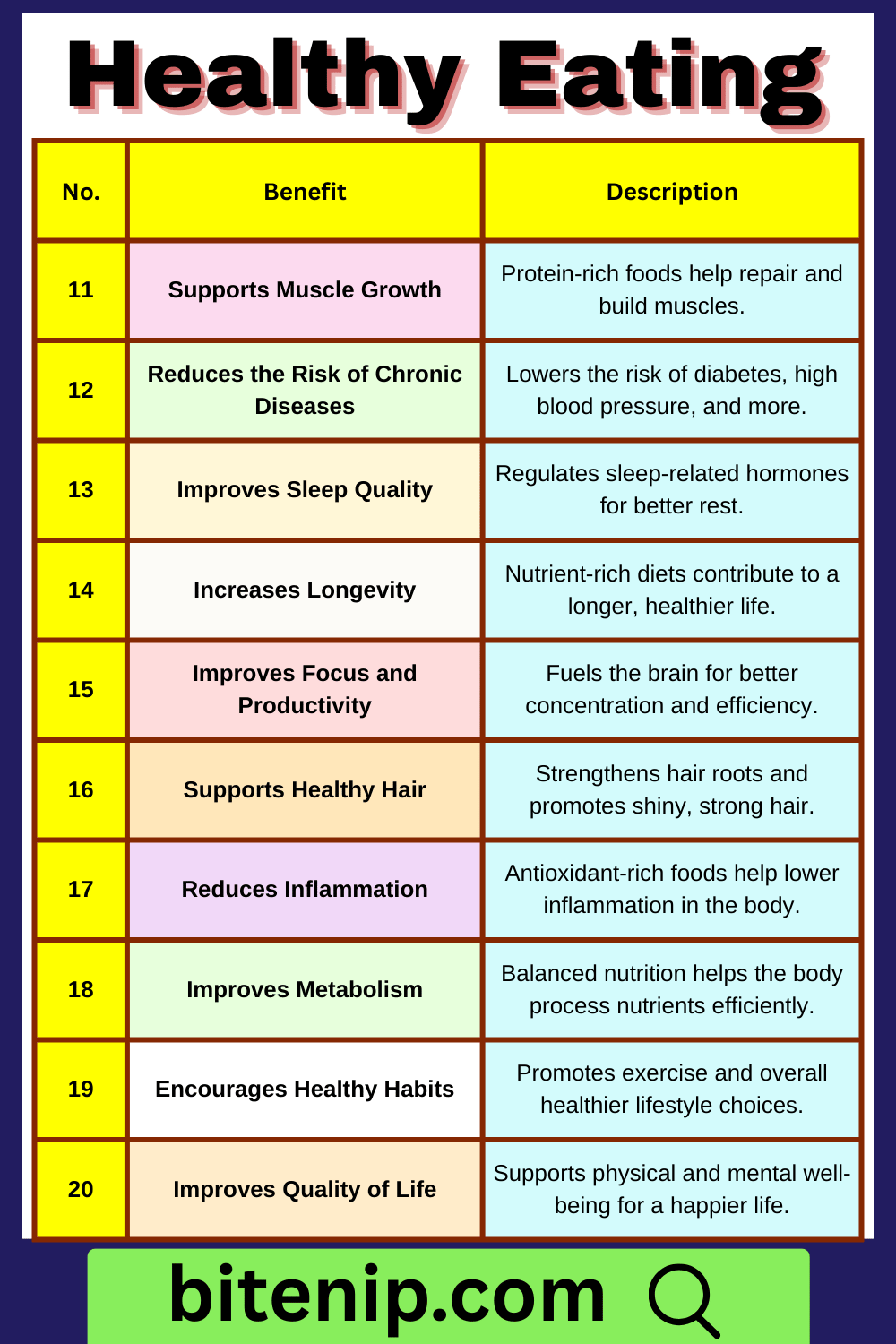
Benefits of healthy eating