


The Paleo diet has gained massive attention in recent years. In fact, many people now follow this eating style to improve their health naturally. Essentially, the Paleo diet focuses on foods that early humans ate before modern farming began.
At its core, the Paleo diet encourages whole, unprocessed foods. At the same time, it removes items that entered the human diet later through agriculture and industrial processing. Because of this, many followers believe it supports better digestion and overall wellness.
What Is the Paleo Diet?
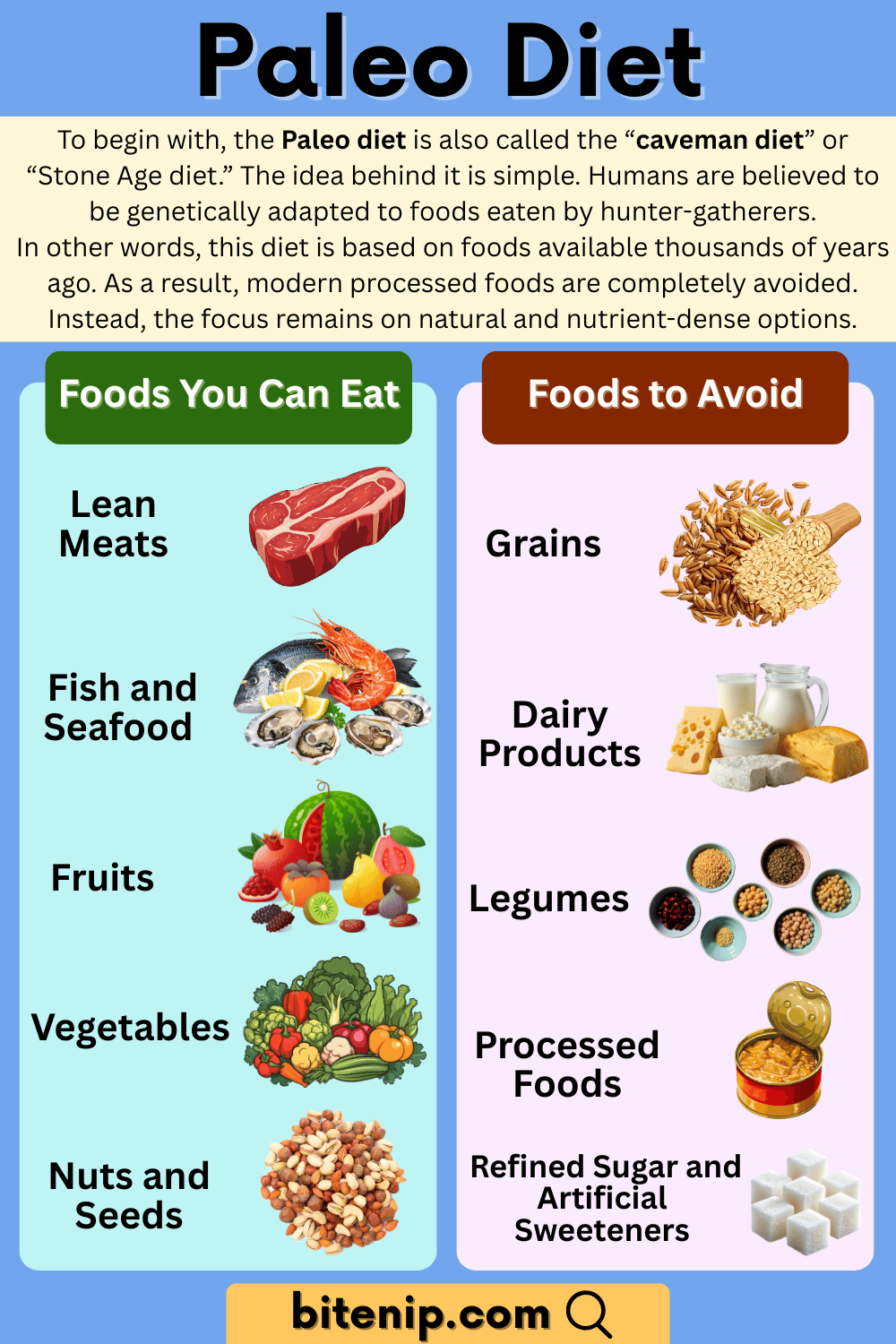
To begin with, the Paleo diet is also called the “caveman diet” or “Stone Age diet.” The idea behind it is simple. Humans are believed to be genetically adapted to foods eaten by hunter-gatherers.
In other words, this diet is based on foods available thousands of years ago. As a result, modern processed foods are completely avoided. Instead, the focus remains on natural and nutrient-dense options.
The Main Principle of the Paleo Diet
First of all, the Paleo diet follows one clear rule: eat real food. Rather than counting calories, it emphasizes food quality. Because of this approach, people often feel more satisfied after meals.
Moreover, the diet avoids foods that may cause inflammation or blood sugar spikes. Therefore, many people choose Paleo to support stable energy levels throughout the day.
Foods You Can Eat on the Paleo Diet
When following the Paleo diet, many healthy foods are allowed. Most importantly, these foods are fresh and minimally processed.
1. Lean Meats
To start, grass-fed beef, chicken, turkey, and lamb are encouraged. Additionally, wild-caught meats are preferred because they contain better nutrients.
2. Fish and Seafood
Equally important, fish like salmon, tuna, and sardines are excellent choices. Since these are rich in omega-3 fats, they support heart and brain health.
3. Fruits
Naturally, fruits such as apples, berries, oranges, and bananas are included. However, they should be eaten in moderation due to natural sugars.
4. Vegetables
Without a doubt, vegetables form a large part of the Paleo diet. Leafy greens, carrots, broccoli, and peppers are all excellent options.
5. Nuts and Seeds
In addition, almonds, walnuts, chia seeds, and flaxseeds are allowed. Still, portion control is important because these foods are calorie-dense.
6. Healthy Fats
Lastly, healthy fats like olive oil, coconut oil, and avocado oil are encouraged. These fats help keep you full and energized.
Foods to Avoid on the Paleo Diet
On the other hand, certain foods are completely excluded. These items are believed to be harmful or unnecessary.
1. Grains
First and foremost, wheat, rice, oats, and corn are avoided. This includes bread, pasta, and cereals.
2. Dairy Products
Similarly, milk, cheese, yogurt, and butter are not part of the Paleo diet. The reason is that dairy entered the human diet much later.
3. Legumes
In the same way, beans, lentils, and peanuts are excluded. These foods may contain compounds that affect digestion.
4. Processed Foods
Most importantly, processed snacks, fast food, and packaged meals are strictly avoided. These often contain additives and refined sugars.
5. Refined Sugar and Artificial Sweeteners
Finally, white sugar, syrups, and artificial sweeteners are not allowed. Instead, natural sweetness from fruits is preferred.
Paleo Diet
Health Benefits of the Paleo Diet
Many people follow the Paleo diet for its potential health benefits. While results may vary, several positive effects are commonly reported.
To begin with, weight loss often occurs naturally. Since processed foods are removed, calorie intake usually drops without effort.
Additionally, blood sugar levels may improve. Because refined carbs are avoided, insulin spikes are less common.
Furthermore, digestion often becomes better. Whole foods are easier for the body to process, which may reduce bloating.
At the same time, energy levels can feel more stable. Rather than sudden crashes, people experience steady fuel throughout the day.
Possible Downsides of the Paleo Diet
Despite its benefits, the Paleo diet is not perfect. Therefore, it is important to understand its limitations.
For example, avoiding dairy may reduce calcium intake. As a result, bone health should be monitored carefully.
Likewise, the diet can be expensive. Grass-fed meats and fresh produce often cost more.
In addition, the strict rules may feel hard to follow long-term. Social events can also become challenging.
Who Should Try the Paleo Diet?
Generally speaking, the Paleo diet may suit people who prefer natural foods. Those looking to reduce processed food intake often find it helpful.
However, individuals with medical conditions should consult a doctor first. Especially for athletes, adjustments may be needed to meet energy demands.
Tips to Start the Paleo Diet Easily
To make the transition smoother, a few simple tips can help.
First, clean out your kitchen. Removing non-Paleo foods reduces temptation.
Next, plan meals in advance. This makes healthy choices easier during busy days.
Also, focus on variety. Eating different meats and vegetables prevents boredom.
Finally, listen to your body. Adjust portions and food choices as needed.
Final Thoughts on the Paleo Diet
In conclusion, the Paleo diet is a natural way of eating that focuses on real food. By avoiding processed items, many people experience better health and energy.
While it may not suit everyone, it encourages mindful eating. Most importantly, it promotes a return to simple and wholesome nutrition.
If followed correctly, the Paleo diet can become a sustainable lifestyle rather than a short-term trend.


